What is toothpaste abrasiveness(RDA)?
The primary purpose of toothpaste is to clean plaque from teeth. Some toothpastes gently polish the enamel, while others are more abrasive, which over time can make teeth sensitive.
What is RDA?
Abrasives in toothpaste are insoluble solid particles designed to mechanically remove stains, plaque and food debris from teeth while polishing their surface.
Common abrasives in toothpaste include hydrated silica, silica, sodium bicarbonate, calcium carbonate, calcium pyrophosphate and hydroxyapatite.
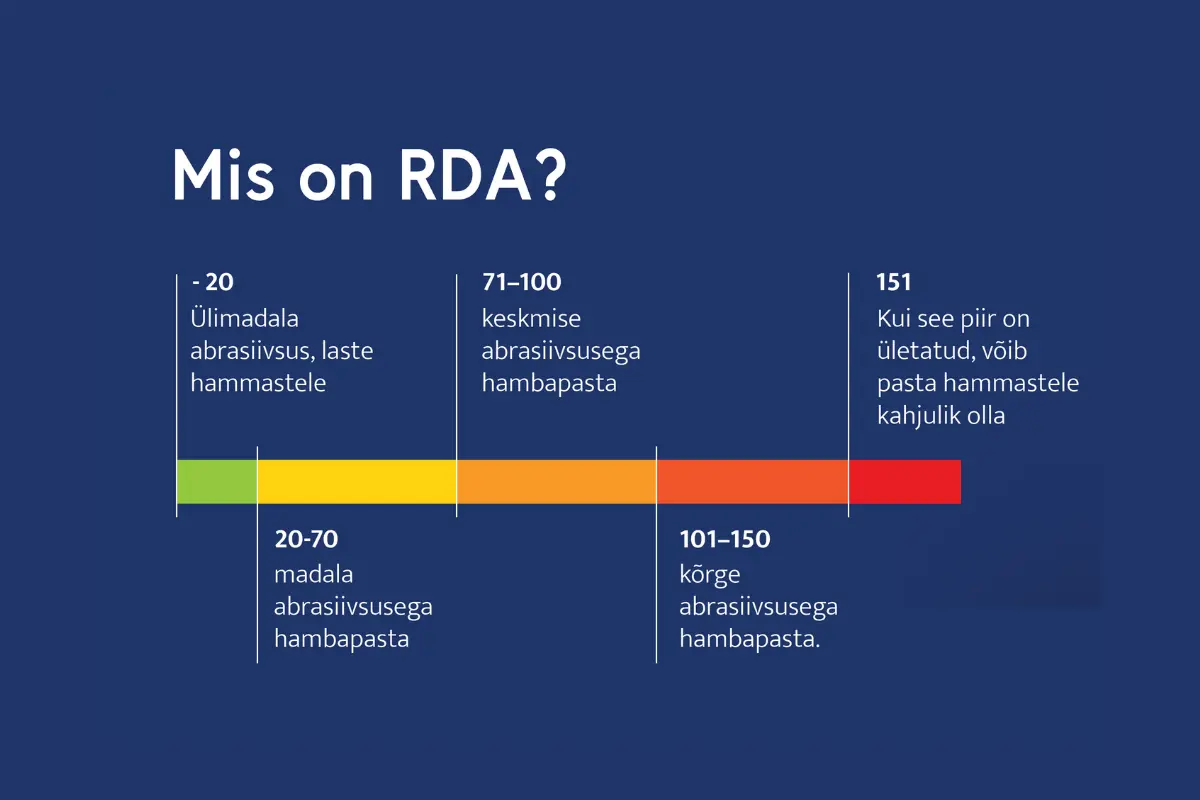
The abrasiveness of a toothpaste depends on the hardness, size, and quantity of these particles. Abrasiveness is measured using the RDA scale (Relative Dentin Abrasion). After laboratory testing, an RDA value is certified and displayed on toothpaste packaging.
- Ultra-low abrasive toothpastes (RDA up to 20) are intended for cleaning young children’s teeth.
- Low to medium abrasive toothpastes are recommended for daily oral care for older children and adults.
- High abrasive toothpastes are used to remove pigmented stains, ideal for smokers, consumers of colored drinks or those prone to plaque buildup.
Abrasiveness of whitening toothpastes
Teeth are naturally bright, but each person’s tooth shade varies. Daily consumption of staining foods or drinks, especially smoking, can gradually darken teeth. Abrasive toothpastes can safely remove these stains and restore natural brightness.
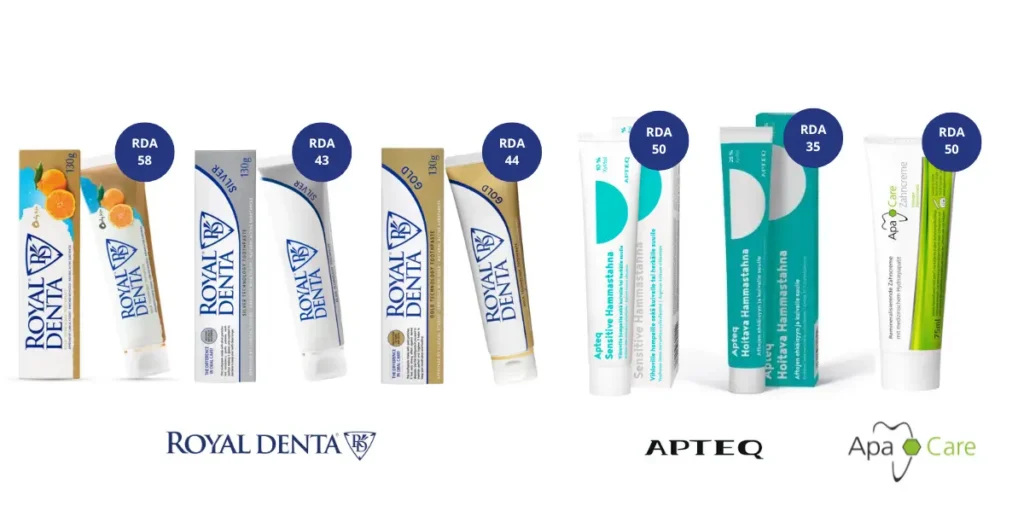
To maintain natural tooth color after whitening treatments, daily oral care should use low-abrasive toothpastes (RDA up to 70). For example, Royal Denta Silver toothpaste has an RDA of 43. It is safe to use with both soft manual and electric toothbrushes and can even be used on aesthetically restored teeth.
Care for restored teeth
Abrasiveness is particularly important for those with dental restorations or implants. Highly abrasive toothpastes can accelerate wear on restorations, potentially damaging the surface. Low-abrasive toothpastes (RDA up to 70) are recommended—they clean effectively without harming teeth or fillings.
Royal Denta offers Gold (RDA 44) and Jeju (RDA 58) toothpastes, ideal for daily care of restored or implanted teeth. These pastes safely remove plaque while benefiting gum health.
Why RDA matters when using an electric toothbrush
RDA is especially important when brushing with an electric toothbrush. Sonic, ultrasonic, or rotating brushes make thousands of movements in a short time compared to manual brushing. While highly effective, using a very abrasive toothpaste with these brushes can damage enamel or gums if used incorrectly.
Dentists recommend keeping the RDA value below 70 when using an electric toothbrush to avoid enamel damage.
Find the right toothpaste that suits your needs in our product range!